
Black Friday Headphone Deals: How to Avoid Counterfeit Listings
You’ve been waiting weeks for Black Friday. You spot a pair of Bose QuietComfort Ultra headphones at 60% off, or Sennheiser Momentum 4s for under £100, and your heart races. You add them to your basket, pay, and then the doubt creeps in. Was that price simply too good to be true? For thousands of UK shoppers every November, that excitement turns into a sinking feeling when the parcel arrives and the headphones are fake. At fakeheadphones.com, we’ve seen it happen again and again, and we want to make sure it doesn’t happen to you this year.
Why Black Friday Is a Goldmine for Counterfeiters
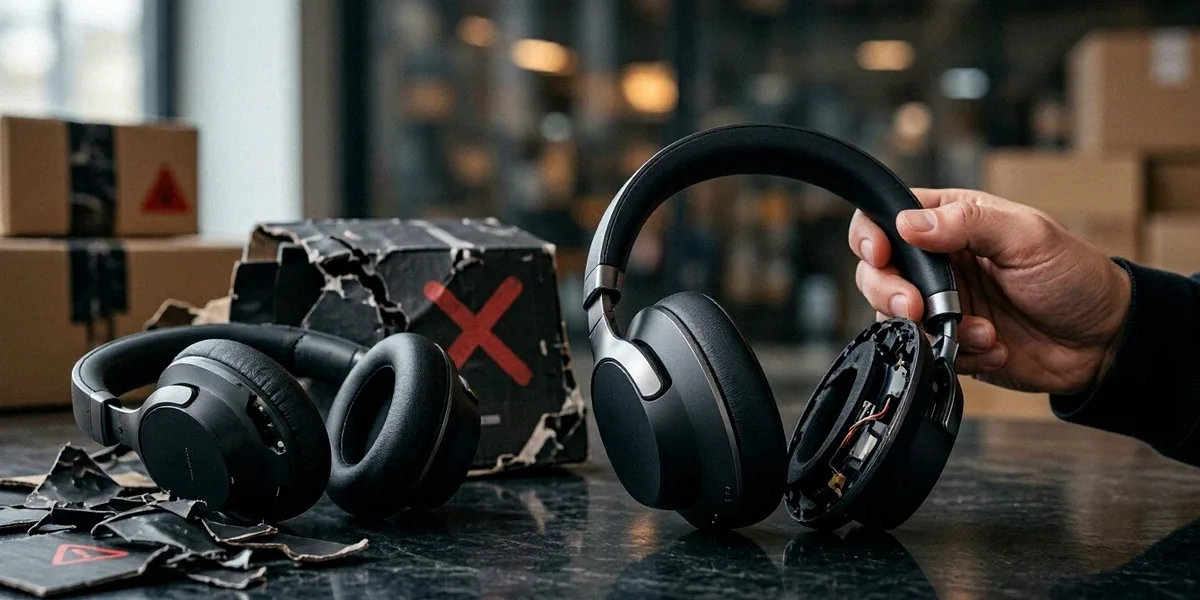
Black Friday has become the single biggest shopping event of the UK calendar, and counterfeiters know it. The sheer volume of transactions means fake headphones and counterfeit earbuds can slip through marketplaces like Amazon, eBay, and TikTok Shop far more easily than at any other time of year. Listings appear and disappear within hours, and overstretched platform moderation teams simply can’t keep up. According to Trading Standards, UK shoppers lost over £10 million to counterfeit goods during last year’s Black Friday period alone — and audio products were among the most commonly faked items.
The psychology of a ‘too good to be true’ deal
Counterfeiters rely on urgency and excitement. When you see a deal ending in two hours and only three units left in stock, your brain switches from careful analysis to panic buying. Scarcity tactics, countdown timers, and eye-catching discount percentages are all designed to stop you doing the one thing that would protect you: pausing to check the seller. We always advise shoppers to slow down before hitting “buy” — no genuine Black Friday deal is worth losing £200 to a fake.
How counterfeiters exploit UK delivery networks
Many counterfeit operations now ship stock into the UK in advance and store it in fulfilment warehouses, which means the tracking information looks completely domestic. A seller might show a UK dispatch address, next-day delivery, and even a Royal Mail tracking number, yet the product still turns out to be fake Bose or counterfeit Sennheiser gear. This is why a UK address alone isn’t proof of legitimacy — you need to verify the seller itself, not just the postcode.
Red Flags to Spot Fake Bose and Counterfeit Sennheiser Listings
Knowing what a counterfeit listing looks like is your best defence. In our experience reviewing hundreds of suspicious listings, the same warning signs come up over and over again.
- Prices below 50% of the recommended retail price, especially on current-generation models
- Stock images pulled from the brand’s official website instead of real photos of the actual product
- Sellers with no UK return address, or a return address that turns out to be a virtual office
- Brand-new accounts with a sudden burst of five-star reviews, many of them generic
- Product descriptions with awkward phrasing, spelling errors, or copied spec sheets
- No mention of a manufacturer warranty or serial number verification
Price check: what genuine deals actually look like
Genuine Black Friday discounts on premium audio do exist, but they’re rarely dramatic. Expect 15–30% off flagship models from authorised retailers, and slightly more on older generations being cleared. If a listing claims 60–70% off a current Bose or Sennheiser model, treat it as a red flag until proven otherwise.
Seller feedback and location: why a UK address matters
A legitimate UK seller should have a verifiable registered business address, a consistent trading history, and feedback that stretches back months or years rather than days. If a marketplace seller hides behind a generic name like “TechDeals UK Store” with no company information, we’d walk away. You can cross-check a company number for free on the Companies House website.
Packaging and serial number checks for Sennheiser and Bose
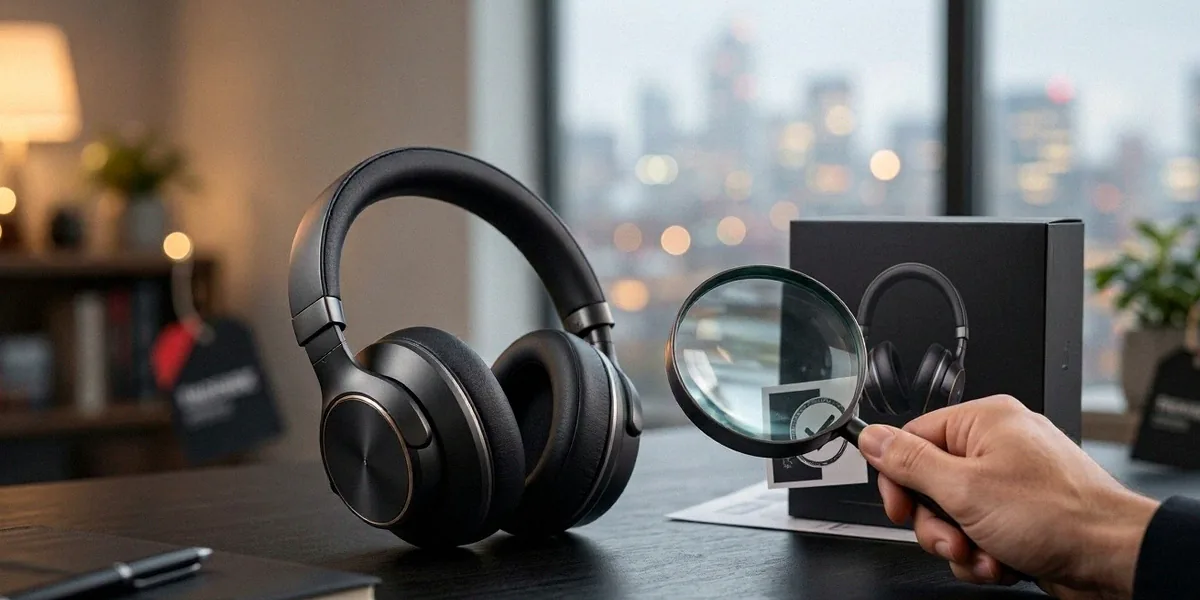
When your headphones arrive, inspect the packaging carefully. Genuine Sennheiser products include a holographic authenticity sticker and a serial number you can verify directly through the Sennheiser website. Bose packaging uses crisp printing, a properly fitted inner tray, and a serial number that matches the one on the product itself. If the box feels flimsy, the printing is blurry, or the serial number doesn’t register, you’re almost certainly holding a counterfeit.
Trading Standards Advice: Your Rights and How to Verify Sellers
Trading Standards and Citizens Advice both publish clear guidance for UK shoppers buying online. Before you buy, check the seller’s registered business address, read the terms and conditions, and confirm there’s a clear returns policy. Under the Consumer Rights Act 2015, goods must be of satisfactory quality, fit for purpose, and as described — and counterfeit headphones fail on all three counts. Distance selling regulations also give you a 14-day cooling-off period for most online purchases, starting the day you receive the goods.
Using credit card protection to your advantage
Section 75 of the Consumer Credit Act protects purchases between £100 and £30,000 made on a credit card, meaning your card provider is jointly liable if something goes wrong. For smaller purchases, debit card chargeback schemes can also help. We always recommend paying by credit card for any high-value audio purchase from an unfamiliar seller.
How to report counterfeit listings to Trading Standards
You can report a suspicious listing to Trading Standards through the Citizens Advice consumer service on 0808 223 1133 or via their online form. Include the listing URL, seller name, screenshots, and any communication you’ve had. Reports help Trading Standards build cases against repeat offenders and get fake listings removed faster.
Where to Buy Genuine Headphones in the UK This Black Friday
The safest way to avoid counterfeit headphones is to buy from a trusted UK retailer or an authorised dealer. Our go-to list includes John Lewis, Currys, Richer Sounds, Argos, and the official brand stores for Sennheiser and Bose. These retailers honour manufacturer warranties, offer proper returns, and are accountable under UK consumer law.
Authorised UK retailers vs. marketplace sellers
Marketplace sellers on Amazon, eBay, and TikTok Shop are not automatically untrustworthy, but the risk is far higher. Even sellers claiming to be UK-based may be reselling grey imports or outright fakes. If you must buy through a marketplace, check whether the seller is listed as an authorised retailer on the brand’s own website first.
Checking brand websites for official Black Friday deals
Both Sennheiser and Bose run their own Black Friday promotions through their UK online stores. Sign up to their newsletters in advance, and you’ll often get early access to genuine discounts without any risk of receiving counterfeit earbuds.
What to Do If You’ve Already Bought Fake Headphones
If you suspect you’ve received counterfeit headphones, don’t panic — you have options. Start by contacting the seller directly through the platform and requesting a full refund. If they stall or disappear, escalate the case to the platform itself and open a formal dispute. Next, report the seller to Trading Standards via Citizens Advice. Finally, contact your bank or credit card provider to request a chargeback or Section 75 claim.
How to request a refund or chargeback
Gather your evidence: photos of the packaging, the serial number, the listing, and any messages with the seller. Submit these with your chargeback request. Most banks will investigate within 45 days. Remember that the 14-day cooling-off period under distance selling regulations applies regardless of whether the goods are fake — you’re entitled to return them.
Reporting to Action Fraud and Trading Standards
If you’ve lost money to a fraudulent seller, report it to Action Fraud on 0300 123 2040 or via actionfraud.police.uk. Simultaneously file a report with Trading Standards through Citizens Advice. These reports build the intelligence needed to shut down counterfeit operations targeting UK shoppers.
FAQ
How can I tell if Sennheiser headphones are genuine?
Check for the holographic authenticity sticker on the packaging and verify the serial number on the official Sennheiser website. Genuine Sennheiser packaging is sturdy, printing is sharp, and the serial number will match the product.
Are Black Friday headphone deals on Amazon safe?
They can be, but only if you buy directly from Amazon or from a seller listed as an authorised retailer on the brand’s UK website. Third-party sellers with no verifiable UK business address are a significant risk.
What should I do if I’ve been sold fake Bose headphones?
Contact the seller for a refund, escalate to the platform, report the seller to Trading Standards via Citizens Advice, and request a chargeback from your card provider. If fraud is involved, report it to Action Fraud.
Does the Consumer Rights Act 2015 cover counterfeit goods?
Yes. Under the Consumer Rights Act 2015, goods must be as described and of satisfactory quality. Counterfeit headphones breach these requirements, giving you a legal right to a refund.
How do I report a counterfeit headphone listing in the UK?
Report it to Trading Standards through the Citizens Advice consumer service on 0808 223 1133, and to the platform hosting the listing. Include screenshots and the listing URL to help investigators.
A little vigilance during Black Friday can be the difference between bagging a genuine bargain and losing your money to a counterfeiter. Stick to authorised UK retailers, check serial numbers and packaging, and never let urgency override common sense. Share our guide with friends and family before the sales begin — it takes two minutes and could save someone you care about from a very disappointing delivery.