
Why Counterfeit Headphones Can Be a Battery and Charger Safety Risk
Picture the scene: you’re on the 07:42 train into Manchester Piccadilly, and the cheap pair of earbuds you bought online last week are getting uncomfortably warm against your ear. Within minutes they’re hot enough to make you flinch, and there’s a faint chemical smell you can’t quite place. That’s not a minor annoyance — it’s a warning sign. At fakeheadphones.com, we’ve spent years helping UK buyers spot counterfeit audio gear, and in this guide we want to expose the hidden dangers that live inside fake headphones: substandard lithium-ion cells, missing protection circuits, and chargers that were never designed to meet UK safety standards.
The Hidden Dangers Inside Counterfeit Headphones
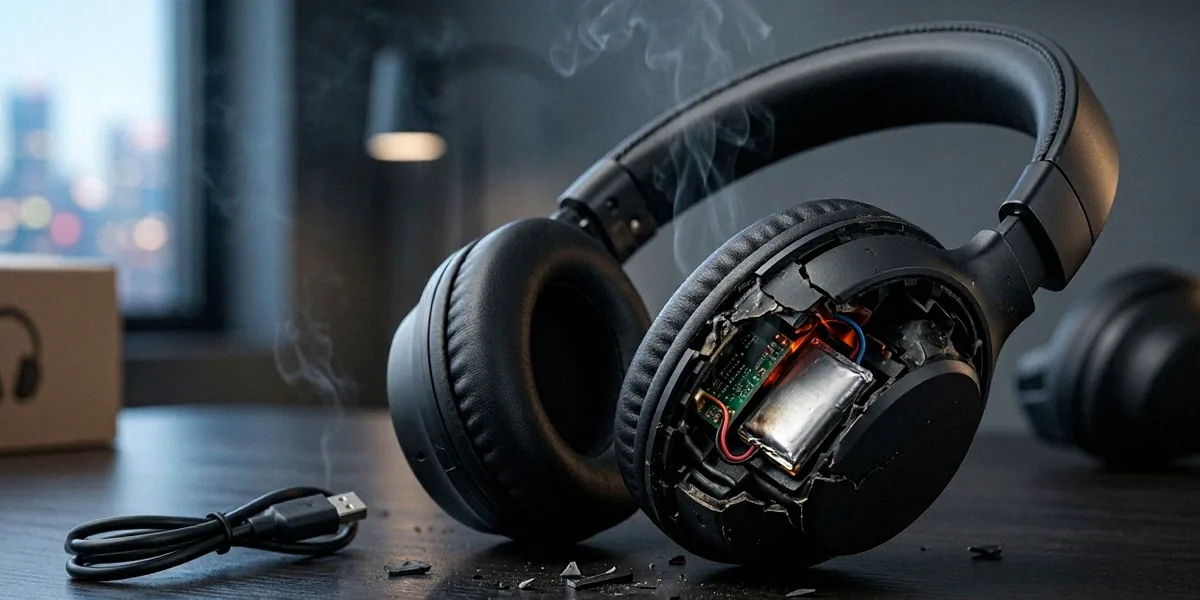
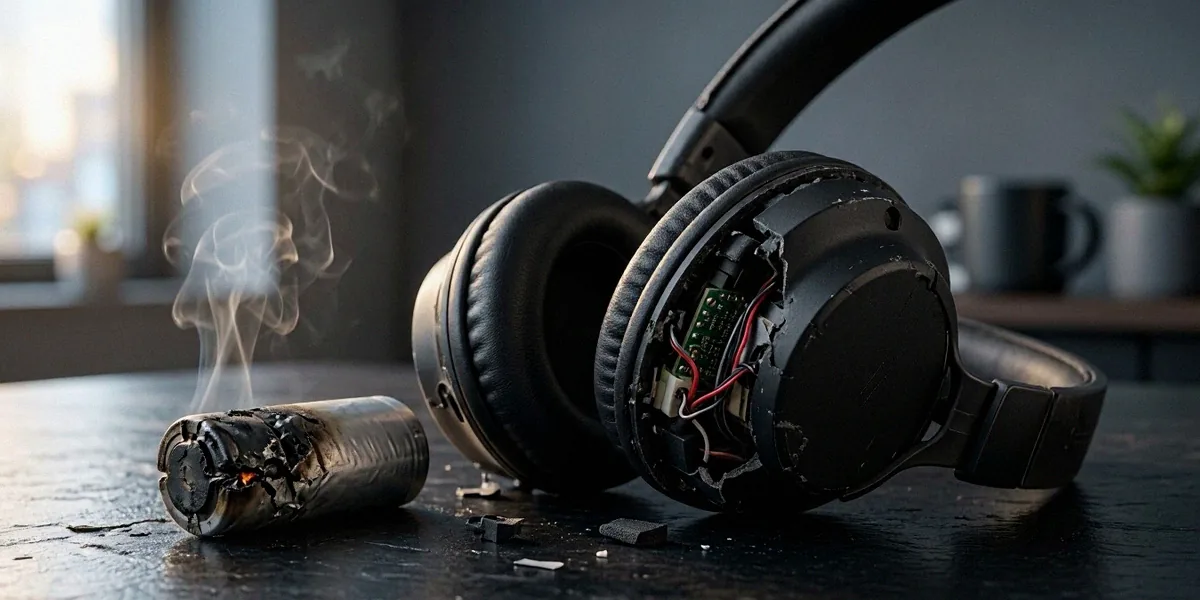
Counterfeit headphones are built to hit a price point, not a safety standard. Manufacturers of fake Bose and counterfeit earbuds often source the cheapest lithium-ion cells available, frequently salvaged from rejected production batches or recycled from old devices. These cells are then crammed into a housing with no thermal management, no ventilation, and sometimes no protection circuitry at all. The result is a product that can overheat during normal use, short-circuit when charging, or fail catastrophically if dropped or crushed.
How Fake Batteries Differ from Genuine Ones
A genuine pair of headphones from a reputable brand uses cells that have been tested against international standards, with consistent chemistry, controlled manufacturing tolerances, and documented capacity ratings. Fake batteries rarely have any of this. We’ve seen counterfeit earbuds advertised as having “40-hour battery life” that contain cells rated for a fraction of that, running them well beyond their safe discharge limits. Overcharging a cheap cell with no cut-off protection is one of the most common routes to a lithium-ion battery fire.
Why Protection Circuits Matter
Protection circuits — often called PCM or BMS boards — do three critical jobs: they stop overcharging, prevent over-discharging, and cut the current if the cell short-circuits. Genuine Sennheiser and other legitimate brands build these safeguards into every battery. Counterfeiters skip them because they cost money and take up space. Without a protection circuit, a single fault — a damaged USB port, a swollen cell, a dodgy charger — can escalate from a warm earbud to a smoking one in seconds.
Real Incidents: When Fake Headphones Catch Fire
This isn’t theoretical. UK fire services and Trading Standards have logged multiple incidents involving counterfeit electronics, including earbuds that ignited on flights and headphones that caught fire while charging overnight in homes. Lithium-ion battery fires burn hot, spread fast, and produce toxic fumes, which is why aviation authorities treat them as a serious in-flight hazard.
Case Study: A Fake Bose Headphone Fire
In one widely reported case, a commuter’s counterfeit Bose headphones began smoking and then burst into flames while plugged into a laptop on a train. The passenger suffered minor burns, and the carriage had to be evacuated. Investigators found the battery had no protection circuit and the cell was a non-branded unit with no traceable manufacturing origin. The headphones had been bought from an online marketplace at roughly a third of the retail price — a classic red flag.
Trading Standards and UK Safety Alerts
Trading Standards teams across the UK regularly seize and test counterfeit electronics, and the results are consistently alarming. Products are frequently found to lack UKCA marking, fail insulation resistance tests, and use plugs that don’t meet BS 1363 requirements. When Trading Standards issues a safety alert about unsafe electronics, it’s usually because a product has already caused injury or fire — not because of a paperwork technicality.
Charger Risks: More Than Just a Bad Cable
The charger that comes with a fake pair of headphones is often just as dangerous as the headphones themselves. Counterfeit chargers and fake Sennheiser chargers frequently lack UK safety marks such as UKCA, use undersized wiring, and skip the isolation barriers that prevent mains voltage from reaching the low-voltage output. That’s how people get electric shocks from a device they thought was harmless.
Fake Chargers and Overheating
Counterfeit chargers often deliver unstable voltage, spiking above the rated output when the load changes. That surge goes straight into the battery. Combined with a fake headphone’s missing protection circuit, you’ve got a recipe for overheating, swelling, and in the worst cases, fire. We’ve seen chargers that get too hot to touch within minutes of being plugged in — a clear sign the internal components are undersized for the job.
Compatibility Issues with Genuine Devices
Even if a fake charger doesn’t catch fire, it can still wreck your gear. Incorrect voltage or polarity can damage the charging controller inside a genuine device, and a poorly regulated charger can shorten battery lifespan dramatically. If you’ve got a real pair of headphones and you charge them with a counterfeit adapter, you’re gambling with a device that cost you real money.
How to Spot Counterfeit Headphones and Chargers
Spotting fakes takes a bit of practice, but a few consistent checks will catch the vast majority of counterfeits sold in the UK.
- Check the serial number. A genuine Sennheiser product will have a serial number you can verify through the brand’s official channels. If the number is missing, duplicated across listings, or doesn’t match the packaging, walk away.
- Look for UK safety marks. Legitimate chargers and mains-powered accessories sold in the UK should carry UKCA marking. Its absence is a serious red flag.
- Be sceptical of too-good-to-be-true pricing. If a pair of fake Bose headphones is listed at 70% off retail from a seller with no history, it’s almost certainly counterfeit.
- Buy from authorised retailers. This is the single most effective step you can take. Authorised UK retailers source stock through official distribution channels.
- Inspect the packaging and print quality. Blurry logos, mismatched fonts, and spelling errors on the box are common on counterfeits.
Checking Serial Numbers and Packaging
Start with the box. Genuine packaging uses crisp printing, consistent colour, and clear model information. Then check the serial number on the product itself against the one on the box — counterfeiters often reuse a single number across thousands of units, so a quick search online can reveal whether it’s been flagged before.
Red Flags in Online Listings
Marketplace listings with stock photos instead of real product images, sellers based overseas with no UK return address, and reviews that mention “arrived without a box” or “sound quality is off” are all warning signs. If the listing promises features the genuine model doesn’t have, that’s another giveaway.
What to Do If You Own Fake Headphones
If you suspect your headphones or charger are counterfeit, stop using them immediately. Don’t charge them, don’t leave them plugged in overnight, and don’t pass them on to someone else. The risk isn’t worth it.
Reporting to Trading Standards
You can report counterfeit goods to Trading Standards through the Citizens Advice consumer service. Provide as much detail as you can: the seller’s name, the platform, the listing URL, and any photos of the product. Your report helps Trading Standards build cases against repeat offenders and can trigger wider safety alerts.
Safe Disposal of Lithium-Ion Batteries
Never put lithium-ion batteries in your household bin — they can ignite in refuse trucks and recycling facilities. Take them to a local council recycling centre or a retailer that offers battery recycling. Many UK supermarkets and electronics shops have collection points at the front of the store.
Counterfeit headphones might save you a few pounds at checkout, but the real cost — a house fire, a burned hand, or a ruined device — is far higher. Stick to authorised retailers, verify serial numbers, and check for UK safety marks. If this guide helped you, share it with a friend who’s tempted by a bargain that looks too good to be true.
FAQ
How can I tell if my Sennheiser headphones are genuine?
Check the serial number against Sennheiser’s official verification channels, inspect the packaging for print quality, and confirm you bought from an authorised UK retailer. Genuine Sennheiser products also come with proper documentation and UK-compliant accessories.
Are fake headphones really dangerous, or just lower quality?
They’re genuinely dangerous. Counterfeit earbuds and headphones often use unprotected lithium-ion cells that can overheat, swell, or catch fire. Trading Standards has issued multiple warnings about unsafe counterfeit electronics in the UK.
What should I do if my fake headphones start getting hot?
Stop using them immediately, unplug any charger, and move them away from anything flammable. Don’t try to charge them again. Dispose of them safely at a UK recycling centre that accepts lithium-ion batteries.
Do fake chargers damage genuine headphones?
Yes. Counterfeit chargers can deliver unstable voltage that damages the charging circuitry inside genuine devices, shortening battery life or causing permanent failure — even if they don’t overheat.
How do I report counterfeit headphones in the UK?
Contact the Citizens Advice consumer service, which passes reports to Trading Standards. Include the seller’s details, the platform, and photos if possible. Your report helps protect other buyers.