
Sennheiser In-Ear Headphones: Genuine vs Counterfeit Comparison
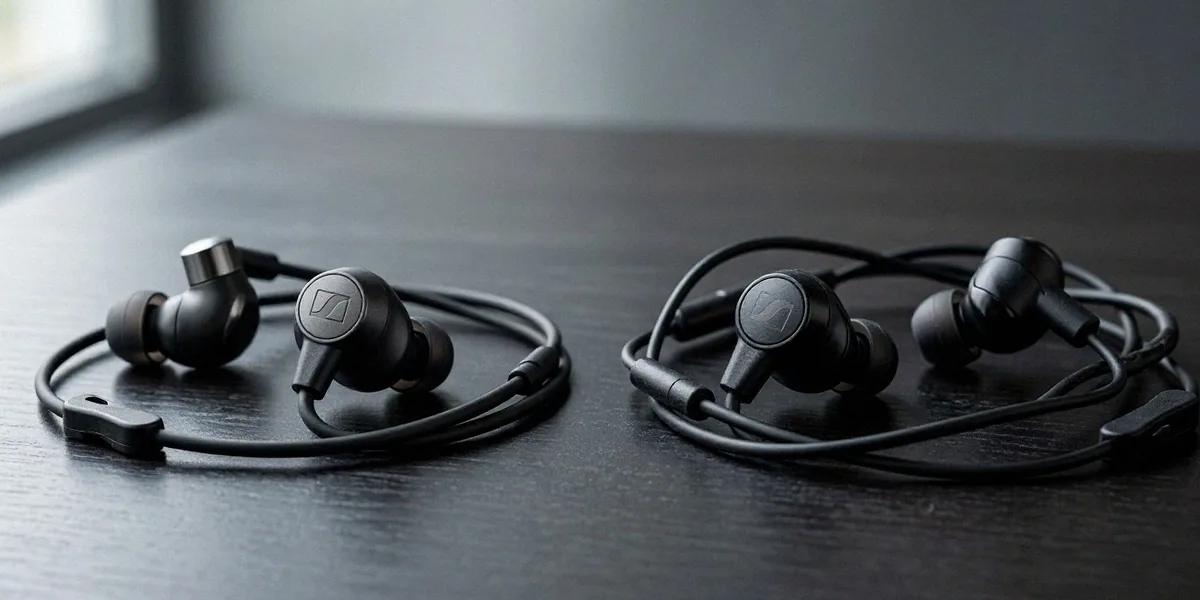
You spotted a pair of Sennheiser in-ears online at nearly half the usual retail price, ordered them, and waited. When they arrived, the box looked slightly off, the cable felt thin, and the sound was a muddy, bass-heavy mess with harsh treble that gave you a headache after twenty minutes. We have been there too, and that experience is exactly why our team put genuine Sennheiser in-ears side by side with a known counterfeit pair to document every difference. This guide walks you through what we found, from packaging to serial numbers, so you can avoid the same mistake.
Why Fake Sennheiser In-Ears Are Flooding the UK Market
Counterfeit earbuds have become a serious problem on UK marketplaces. Amazon, eBay, and Facebook Marketplace are all flooded with listings that look legitimate at first glance, complete with glossy product photos and five-star reviews that were bought in bulk. Sennheiser is a top target because its name carries weight: buyers trust the brand, recognise the logo, and assume a discounted price is simply a good deal rather than a warning sign.
Most fake headphones we have examined originate from the same cluster of overseas factories that churn out counterfeit versions of multiple brands using identical cheap components. These operations undercut genuine retail prices by 50–70%, which is the single biggest tell. If a pair of Sennheiser in-ears that normally sells for £120 is listed at £35, no authorised supply chain in the UK can make that maths work.
The Most Counterfeited Sennheiser Models in the UK
Based on what we have seen in listings and returns, the most commonly faked models include:
- Sennheiser CX 300S and CX 400BT — popular entry-level in-ears with high turnover
- Sennheiser Momentum True Wireless 2 and 3 — premium pricing makes the fake discount more tempting
- Sennheiser IE 100 PRO and IE 300 — favoured by musicians and easily cloned in appearance
- Sennheiser HD 450BT and similar wireless models — frequently bundled with fake accessories
How Counterfeiters Exploit UK Consumer Trust
Counterfeiters understand UK buying habits. They know shoppers check reviews, so they manufacture fake review scores. They know buyers look for familiar retailer names, so they mimic storefront designs. Some even register as marketplace sellers with plausible-sounding business names and UK-sounding addresses that turn out to be virtual office mailboxes. The result is that a buyer in Manchester or Birmingham can order what appears to be a genuine Sennheiser product from a “UK seller” and receive a counterfeit shipped from overseas.
Packaging and Unboxing: Genuine vs Counterfeit Earbuds
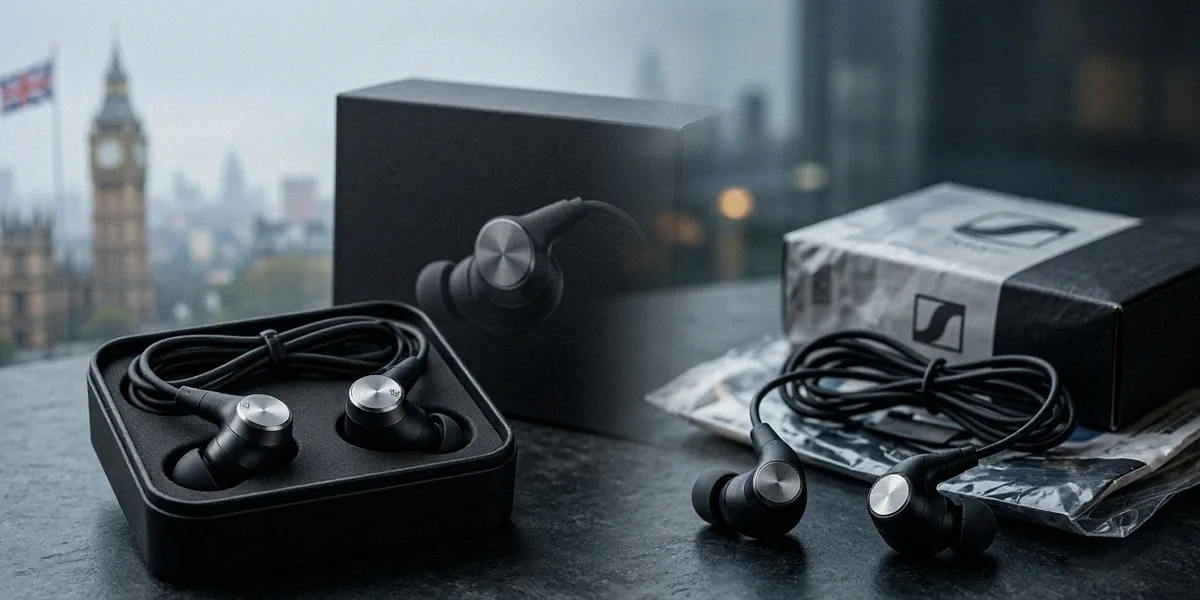
Packaging is where the differences become obvious once you know what to look for. We placed a genuine Sennheiser box next to a counterfeit one, and within seconds the print quality gave it away.
Box Print Quality and Hologram Stickers
Genuine Sennheiser packaging uses crisp, consistent font weights. The logo edges are sharp, and the colour reproduction is accurate across the entire box. Counterfeit boxes often show slightly blurred text, inconsistent font weights, and colours that look washed out or oversaturated. The holographic sticker is another key marker: genuine holograms shift clearly as you tilt the box and include fine detail that is difficult to reproduce. Fake holograms tend to look flat, static, or slightly misaligned.
Genuine Sennheiser boxes also list a UK importer address and contact details. Counterfeit packaging frequently shows vague or missing UK contact information, sometimes listing only a generic European address or nothing at all.
Accessories, Manuals, and Missing UK Paperwork
Open a genuine box and you will find neatly arranged accessories: the correct ear tips in multiple sizes, a properly moulded carry case, and a manual printed on quality paper with clear diagrams. Counterfeit boxes often include ear tips that do not fit properly, a flimsy case with a chemical smell, and manuals with spelling errors or low-resolution printing. Genuine UK stock also includes the correct warranty documentation and, where applicable, UKCA marking. If the paperwork looks photocopied, treat it as a red flag.
Build Quality and Sound: Spotting Fake Bose and Sennheiser Fakes
Once you hold both pairs in your hand, physical differences become clear. We have also tested fake Bose models alongside counterfeit Sennheiser in-ears, and the pattern is remarkably consistent: they often share the same cheap drivers sourced from the same suppliers.
Materials, Weight, and Finish Red Flags
Check for these physical tells:
- Moulding seams: Genuine earbuds have clean, nearly invisible seams. Fakes show rough edges and visible plastic flash.
- Cable strain reliefs: Genuine Sennheiser cables have properly engineered reliefs at the jack and earbud entry points. Fakes use stiff, thin plastic that cracks within weeks.
- Nozzle mesh: Genuine mesh is finely woven and evenly glued. Counterfeit mesh is coarse, uneven, or glued with visible residue.
- Logo etching: Genuine logos are laser-etched with sharp edges. Fake logos are often printed and rub off with a fingernail.
- Weight: Counterfeit earbuds frequently feel lighter than genuine models because internal components are cheaper and smaller.
Listening Test: What Genuine Sennheiser Sound Should Be
Genuine Sennheiser in-ears deliver balanced tuning with controlled bass, clear mids, and smooth treble. Counterfeit models typically produce bloated, muddy bass that bleeds into the midrange, combined with harsh, fatiguing treble. Vocals sound distant or compressed. If you have owned genuine Sennheiser before, the difference is immediate. If you have not, compare against a known-good pair at a retailer like Richer Sounds or Currys before committing online.
Serial Numbers, Apps, and Online Verification Tools
Serial number verification is one of the most reliable ways to confirm authenticity, but it requires care because some counterfeiters now clone legitimate serial numbers.
Checking Serial Numbers on the Box and Earbuds
Genuine Sennheiser products carry a serial number on the box and, on many models, on the earbuds or charging case themselves. These numbers should match. If the box serial and the product serial differ, or if the printing looks uneven, that is a strong indicator of a fake. Cross-check the number with Sennheiser UK support directly, especially if the price seemed unusually low.
Using the Sennheiser Smart Control App
The Sennheiser Smart Control app is a powerful verification tool for genuine in-ear models. When you connect a genuine pair, the app recognises the model, displays the correct firmware version, and allows you to adjust EQ settings and update firmware. Counterfeit earbuds typically fail to connect at all, connect as an unknown device, or show incorrect model information. If the app cannot identify your Sennheiser in-ears, that alone is grounds for a return.
Where to Buy Genuine Sennheiser in the UK Safely
The simplest way to avoid counterfeits is to buy from authorised UK retailers. We recommend sticking to established names with clear returns policies and verifiable VAT registration.
Authorised UK Retailers and Price Benchmarks
Trusted UK sources include:
- John Lewis — full warranty support and price matching
- Currys — widespread UK presence and reliable returns
- Richer Sounds — specialist audio retailer with knowledgeable staff
- Sennheiser’s own UK online store — direct from the manufacturer
- Authorised Amazon and eBay sellers — check for the “Sold by” and “Dispatched by” details carefully
Use these retailers to establish a price benchmark. If a marketplace listing is significantly below the authorised retail price, assume it is counterfeit until proven otherwise.
Red Flags When Buying from Marketplaces
Watch for sellers with no verifiable VAT number, no physical UK address, no clear returns policy, or prices 50% or more below retail. Also be wary of listings using stock photos instead of real product images, and sellers who pressure buyers with limited-time discounts. A legitimate seller will happily provide an invoice with a VAT number and honour a standard 14-day return window.
Your Rights and Reporting Counterfeit Earbuds in the UK
If you have already bought counterfeit earbuds, UK law is on your side.
Consumer Rights Act 2015 and Refund Options
The Consumer Rights Act 2015 requires goods to be as described, of satisfactory quality, and fit for purpose. Counterfeit earbuds sold as genuine breach all three. You are entitled to a refund, repair, or replacement. If the seller refuses or disappears, you may be able to claim through your card provider using chargeback or Section 75 of the Consumer Credit Act for purchases over £100.
Reporting to Trading Standards and the IPO
Report fake headphones to Trading Standards via Citizens Advice, which passes cases to the relevant local authority. You can also report counterfeit goods to the Intellectual Property Office, which coordinates with enforcement agencies across the UK. Reporting helps protect other buyers and contributes to takedowns of repeat offenders.
FAQ
How can I tell if Sennheiser in-ears are genuine before buying?
Buy from authorised UK retailers such as John Lewis, Currys, or Richer Sounds, and check that the price is in line with official retail. Avoid marketplace listings that undercut retail by 50% or more.
Does the Sennheiser Smart Control app prove my earbuds are real?
The app recognising your model, showing correct firmware, and allowing EQ adjustments is strong evidence of authenticity. If the app cannot identify your earbuds, they are almost certainly counterfeit.
Can I get a refund for counterfeit earbuds bought online?
Yes. Under the Consumer Rights Act 2015, counterfeit goods sold as genuine entitle you to a refund. If the seller refuses, use chargeback or Section 75 through your card provider.
Where do I report fake headphones in the UK?
Report to Trading Standards via Citizens Advice, and also to the Intellectual Property Office. Both routes help enforcement agencies target counterfeit sellers.
Are fake Sennheiser and fake Bose earbuds made in the same factories?
In many cases, yes. Counterfeit operations often produce multiple brands using the same cheap drivers and components, which is why fake Bose and fake Sennheiser models share similar sound problems.
Buying genuine Sennheiser in-ears comes down to three habits: purchase from authorised UK sellers, verify serial numbers through the Smart Control app and Sennheiser UK support, and report counterfeit earbuds to Trading Standards via Citizens Advice. Every report makes it harder for counterfeiters to operate, and it protects the next buyer from wasting money on fake headphones that never sounded right in the first place.